2021-12-05

Gaze2021
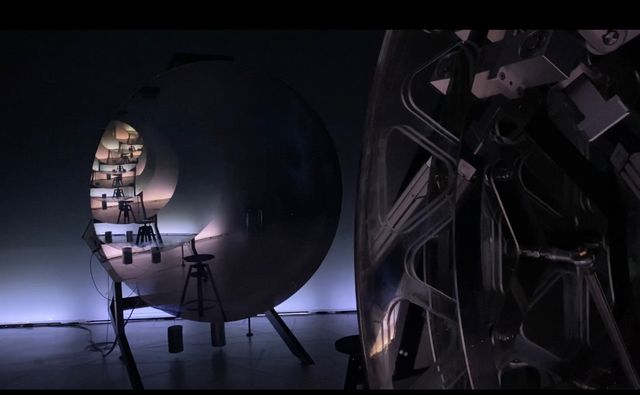
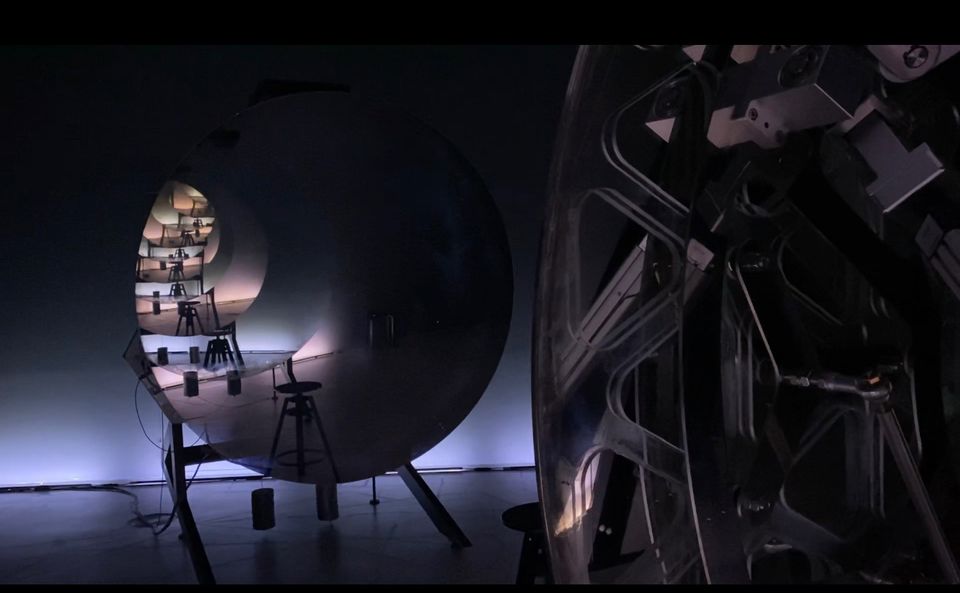
GAZE allows the audience to endlessly oscillate between the subject gazing at oneself and the object of gaze-one's self-image. Kimchi and Chips pays close attention to the effects and phenomena created by the infinite progression of light, and attempts to amplify such effect through a "mirror", an ancient image-producing medium and an apparatus for constructing subjectivity.
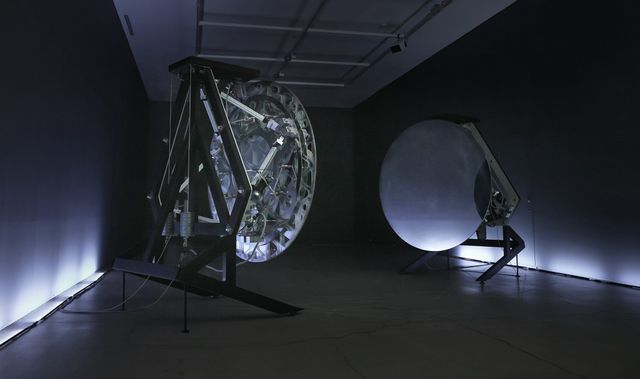
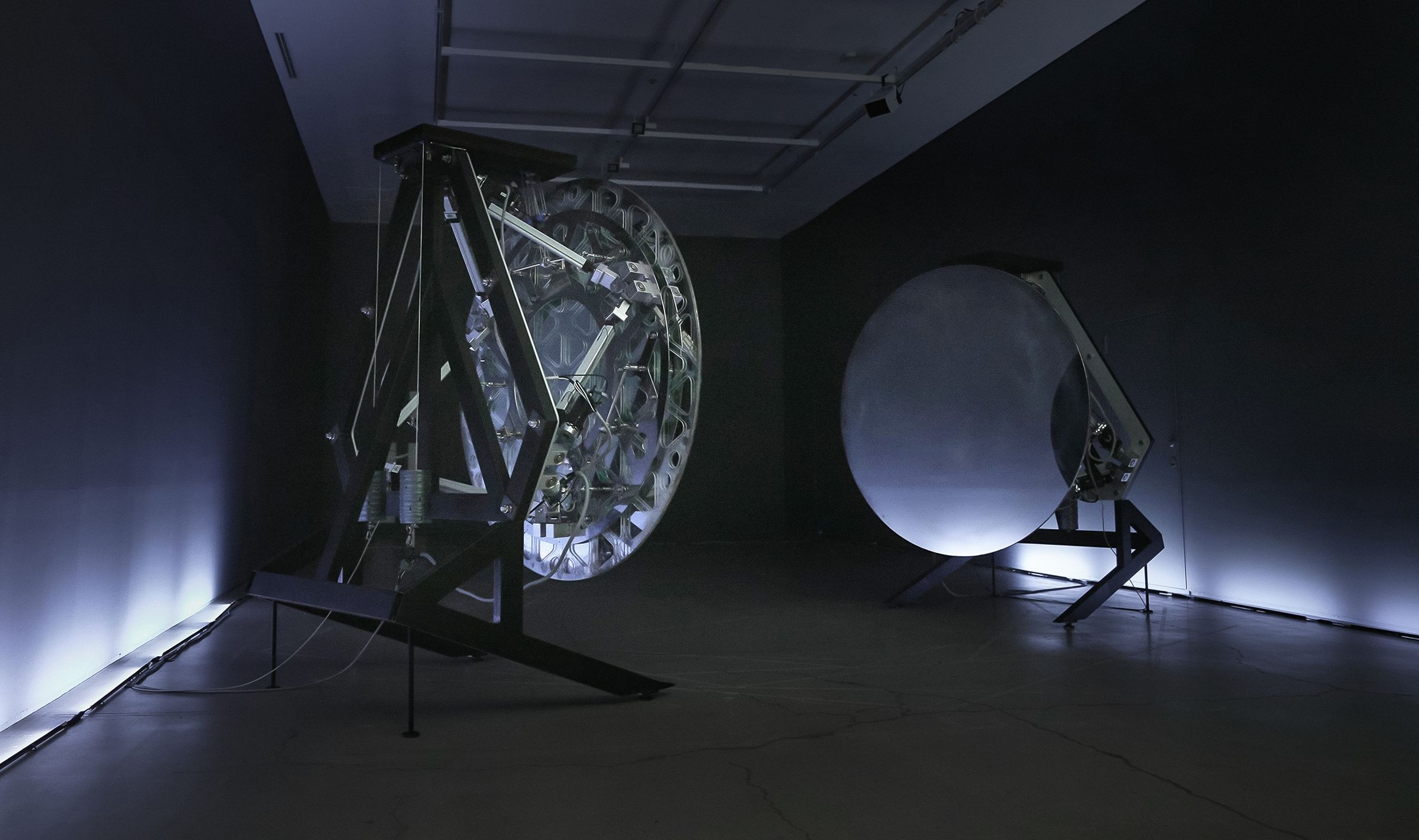
The mirrors we use in our daily lives are mass produced by covering the back side with aluminum, which inevitably yields to a distortion in the image due to light refraction. Such distortion is amplified when the number of reflections increases, leading to a big gap between the actual object and its reflected image. To be able to gaze at oneself ever closer to "reality" by creating a reflection image that is not different from the original, the artists have invented a radically flat glass panel by using Machine Vision that measures the flatness and by repeatedly grinding the surface. Also, by silvering the frontal surface of this glass panel, the duo produced and apparatus called Front Silvered Mirror, which minimizes light refraction and creates a reflection that is almost identical to the actual object.
While two of these frontal mirrors move on a robotic platform, light intervenes, and time and space start to expand. The audience exchanges gazes with one's multiple self, which is reflected in the mirror in a mere second. Moving back and forth between the subject and the object of the gaze, between the protagonist and the observer, between a fraction of a second and an infinite gap in time, the audience encounters an unfamiliar self, or rather an unfamiliar self-image. Offering an experience of infinite doubling, the space will be both a place of meditation and self-reflection and a place of hysteria and schizophrenia.
아주 오래 전 인류는 고요히 고인 물의 표면에서 자신의 상을 처음 보았다. 물에 비친 환영을 자신과 동일시하며 자아를 찾기 시작했는데 흔들리는 수면에 비친 불완전한 자신의 상이 만족스럽지 않았으리라. 완벽한 자신의 상을 보기 위한 인류의 열정은 돌에서 구리로 그리고 청동으로 재료를 옮겨가며 거울을 발전시켰고, 16세기 초 유리판에 주석과 수은의 합금을 붙여 지금과 유사한 거울을 만들었지만 당시 이러한 거울은 보석과 같은 사치품으로 모든 사람이 누릴 수는 없었다. 많은 사람들이 거울을 소유하게 된것은 불과 19세기에 이르러서이다.
라캉의 '거울단계' 이론에 의하면 어린 시절 우리는 거울에 비친 자신의 가시적 이미지를 통해 존재감과 나르시시즘에 사로잡힌다. 거울에 비친 환영의 이미지를 자신과 동일시하며 자아를 구축하기 시작하는데 이 때 거울 속 자신의 모습은 내면의 형성이 없는 단지 가시적인 대상, 즉 타자적인 대상일 뿐이며, 그것을 인식하지 못한채 허구의 자아를 만든다는 것이다. 타자를 통해서 자아를 형성한 우리는 라캉의 말처럼 타자를 벗어나 주체를 발견할 수 없는 모순에서 살게된다. 착각과 오해의 삶이 시작되는 순간이다. 주체적 자아를 지녔다는 착각, 욕망과 응시의 주체가 나라는 착각. 그리고 오늘날 우리가 생산하는 빛깔 좋은 이미지들은 거울이 만든 그것 보다 훨씬 더 큰 착각을 유발한다.
작가는 거울 속 나를 바라보는 익숙함과 바라보고 있는 나를 마주 바라보는 거울 속 시선의 낯설음 사이에 관객을 세운다. 낯설음을 증폭하기 위해 작가는 천체 망원경 제작 기술을 적용해 거울을 직접 만든다. 우리가 일상에서 사용하는 거울은 유리판 후면에 실버링(은도금)을 하여 대량생산되는 일반거울로서 빛의 굴절로 인한 이미지와 톤의 왜곡을 피할 수 없다. 특히 반사의 수가 많아지면 왜곡 또한 증폭이 되어 실재와 큰 괴리를 만든다. 실재와 반사 이미지 사이 괴리가 없는, 그래서 한번 도 본 적 없는 실재에 근접한 자신을 응시하기 위해서 작가는 Machine vision을 이용해 유리판의 평탄도를 측정하고 표면을 수차례 갈고 폴리싱하여 매우 평탄한 유리판을 만든다. 그리고 유리판 전면에 실버링을 하여 빛의 굴절이 전혀 없이 실재와 가까운 상을 반사하는 거울(front silvered mirror)을 만든다.
로보틱 플랫폼에 의해 움직이는 두 대형 전면거울과 빛의 개입이 만드는 시간과 공간의 확장 안에서 관객은 찰라의 시차를 두고 거울 속으로 들어오는 수많은 나를 응시한다. 관객은 응시의 주체와 대상 사이를, 주인공과 관찰자의 시점 사이를, 찰라와 무한대의 시간차 사이를 오가며 낯설은 자아를 만난다.
Credits
Sound design by Robert Henke
Kimchi and Chips team members Jin Lee, Chris Donghwi Kang, Saemin Park
Production with C2 Artechnolozy
Commissioned by the National Museum of Contemporary Art (Korea)